Videos of Yamaha XTZ1200 Super Tenere
Wednesday, June 9, 2010


And another Yamaha XTZ1200 Super Tenere test
Yamaha Super Ténéré
Yamaha’s new go-anywhere machine is inspired by the Sahara. Our writer appreciates its talents in rather cooler conditions

The name Super Ténéré is supposed to evoke images of sand dunes and scorching sunshine — the Ténéré being a particularly inhospitable area of the Sahara. Right now that seems a bad joke: on a mountain pass in France’s Massif Central, the weather has taken an unseasonal turn for the worse and snow is sticking to my visor.
It’s early afternoon on the second day of the Yamaha’s launch. The 18 riders in our group are on identical XT1200Z Super Ténérés, and up here on the 4,039ft Col de Légal the dry heat of the desert is far from anyone’s mind.
At least, if I have to be riding a new bike, the Super Ténéré is not a bad choice. It is truly a bike for all seasons. This is a rugged, go-anywhere machine, inspired by the 1990s model of the same name, which conquered the Sahara’s Ténéré region and took seven wins in the gruelling Dakar rally.
This 1199cc Super Ténéré, much bigger than its 750cc predecessor, was created to compete with BMW’s R1200GS, familiar to bike enthusiasts as a kind of two-wheeled Range Rover. Like the BMW, the Yamaha has twin cylinders. Unlike BMW’s air-cooled, horizontally aligned boxer engine, the Yamaha’s cylinders are arranged vertically and cooled by water.
The Yamaha is as tough as a three-day-old baguette, especially when kitted out with sturdy aluminium pannier cases, matching the bash-plate that protects the underneath of its engine. Handguards on the wide handlebar add to the indestructible feel. And although the Yamaha is tall, and heavy at 261kg, it’s a doddle to ride.
Its 108bhp motor is excellent: powerful, flexible and with an engagingly sweet-revving character that you don’t always get with parallel twins. As we headed south on the autoroute from Paris, the Super Ténéré chugged along effortlessly at 80mph, with plenty of acceleration towards a top speed of 130mph. At motorway speeds you are thankful for the small screen that keeps the bitter wind off your chest.
Despite its hard-man image the Super Ténéré is a sophisticated bike. Its frame is made from simple steel tubes but the bike’s list of high-tech features includes an adjustable traction control system to reduce the chance of rear-wheel slides. There’s also a choice of fuel maps, allowing you to alter engine performance by changing the mix of fuel and air: “sport” for hard riding or “touring” for a softer throttle response.
Off the autoroute and onto winding roads and the bike’s handling comes under scrutiny. It carved through the turns in response to gentle pressure on the handlebars, feeling lighter and more agile than I’d expected from its statistics. Under hard cornering, though, its long-travel suspension felt rather soft and vague.
One thing the Yamaha lacks is the R1200GS’s option of electronically adjustable suspension, which allows instant fine-tuning from the saddle. Although the Super Ténéré’s remote rear-suspension adjustment knob was useful, it was a poor substitute. But I had no complaint about the bike’s powerful linked disc brake system, which, backed up by antilock braking, was reassuring when rain made the roads slippery.
Normally I’d be glad of the 23-litre fuel tank’s generous range of almost 200 miles. Instead, I was counting down the miles until we stopped at a service station to wring out sodden gloves and warm fingers on hand-dryers. Fortunately, the Yamaha’s broad seat is as comfortable as a chaise longue, so it didn’t add to the pain of an 11-hour day.
It is off the tarmac that this bike really shines. On bumpy, potholed dirt tracks, the Yamaha’s suspension and tyres ploughed through with impressive ease. Any machine this big and heavy is bound to be unwieldy off road, but the Super Ténéré’s blend of flexible engine, capable chassis and tough character made it fun on the dirt tracks — until the mountain fog turned to snow.
In Britain the Super Ténéré comes with a range of optional accessories including a bigger screen and heated handlebar grips. The aluminium bash-plate and panniers are standard on this First Edition version, which can be ordered now from Yamaha for £13,499. A cheaper, basic model will be available through dealers next year.
For that price I’d expect hot grips as standard, especially as the proven R1200GS can be equipped with those plus other useful accessories for less money. But Yamaha’s newcomer is a fine and distinctive machine that gives the BMW serious opposition as a commuter, tourer or globe-shrinking all-rounder. Yamaha has donated five of these bikes to Riders for Health, which provides healthcare by motorbike in several African countries. This two-wheeled camel should prove ideal.
Yamaha XT1200Z Super Ténéré First Edition
- Engine 1199cc, parallel twin cylinder, eight-valve, four-stroke
- Power 108bhp @ 7250rpm
- Torque 84 lb ft @ 6000rpm
- Acceleration 0-60mph: 3sec
- Top speed 130mph
- Wet weight 261kg
- Price £13,499
Original Article in The Sunday Times In Gear magazine and Times Online (very similar to his article in Motorcycle Monthly)
(n.b. bold emphases not the author's)
Another XTZ1200 Super Tenere Post
Big, torquey and tough: the new Super Ten is more than ready to tackle its adventure-loving rivals.
It’s obvious why Yamaha decided to create a new generation Super Ténéré with a 1200cc twin-cylinder engine. The only surprise is that the Japanese firm has taken until now to come up with a successor to the original 750cc Super Ténéré, which dominated the Dakar Rally in the 1990s – long before BMW’s R1200GS showed that big dual-purpose bikes can sell in enormous numbers.

Ducati’s super-powerful Multi- strada 1200 has already arrived this year to add to the mix. Yamaha’s 1199cc contender is a more direct rival for BMW, with a similar chunky image and blend of on- and off-road ability. Like the GS engine, the Yamaha’s has twin pots and shaft final drive. But in Yamaha tradition it’s a liquid-cooled parallel twin, with a max output of 108bhp that is almost identical to the boxer’s.
Is it a genuine all-rounder?
It’s certainly built for versatility and adventure, especially in this initial Special Edition form, which includes an aluminium bash-plate and matching panniers. Yamaha say production numbers are limited this year, so they’ve decided to sell only this upmarket version. The basic Super Ténéré will be available next year.
Yamaha chose a suitably advent-urous press launch, too: a trip from Paris to Marrakech in Morocco, using a succession of riders, after which five of the bikes would be presented to motorcycling charity Riders for Health. I joined the first leg and the Yamaha felt big, torquey and tough as I cut through Parisian rush-hour traffic on the first morning, heading for the mountains of the Massif Central.
What’s it like out of town?
Although the Yam is tall, and quite heavy at 261kg wet, it’s very easy to ride. The motor is superbly flexible and has an appealing, smooth-revving character, thanks partly to its balancer shafts and 270º crankshaft layout. Heading south on the autoroute, the Super Ten chugged along effortlessly at 80mph, with acceleration in hand towards a top speed of about 130mph, and with the small, height-adjustable screen helping keep the wind off my chest.
Despite its hard-man image the Super Ténéré is very sophisticated. Its frame is made from simple steel tubes but the list of high-tech electronic features includes YCC-T ride-by-wire throttle control with a choice of two maps, plus adjustable traction control and a linked, ABS-equipped brake system.
How about the chassis?
Handling was pretty good, after we’d turned off the autoroute onto winding roads heading towards Clermont-Ferrand. The Yam carved through the turns feeling lighter and more agile than I’d expected, though under hard cornering its long-travel suspension felt a bit vague – not surprisingly, as there’s a generous 190mm of travel at each end.
One thing the Yamaha lacks, unlike the GS and Multi, is the option of electronically adjustable suspension. Although the Super Ten’s remote rear suspension adjustment knob is a handy feature, it’s not the same thing at all. But I liked the powerful linked disc brake set-up, whose efficient ABS system was welcome when rain made the roads slippery.
On a long trip I’d normally be glad of the 23-litre tank’s near 200-mile range. Instead, in the cold and wet I was glad when the tank ran low, giving me a chance to warm up. Fortunately the Yamaha’s broad seat was very comfortable so didn’t add to the pain.
What’s it like off-road?
Better than I’d expected for such a big, heavy bike. As well as being torquey and well-suspended enough to hold its own on the dirt, the Super Ténéré is as tough as a French farmer’s tractor. It was great on the second day, on bumpy, potholed dirt tracks that the suspension and tyres dealt with impressively.
Any bike this big and weighty is bound to be challenging off-road at times, but the Super Ténéré’s blend of flexible engine and capable chassis made it fun; at least until the snow began.
Fortunately we were soon back on the main road and splashing towards the second night’s stop in Toulouse, where my trip ended while the bikes carried on towards Africa.
Does the Ténéré hit the spot?
Yes, definitely. This Special Edition, which comes with non road-legal headlight protector as well as the bash-plate and panniers, is being sold exclusively via the Internet for £13,499.
That’s quite expensive, given that the proven R1200GS can be equipped with extras including electronically adjustable suspension for less.
However, a cheaper, basic Super Ténéré will be sold via Yamaha dealers in the normal way next year.
Unless you’re desperate, it might make sense to hang on until then. But Yamaha’s classy newcomer is a serious rival for the mighty GS, with the advantage of being fresh and distinctive.
The shortlist of bikes for a round-the-world ride — or perhaps just a big daily commute — just got longer.
Words: Roland Brown
Pictures: Paul Barshon, Alessio Barbanti and Friedemann Kirn
Original Article at Motorcycle Monthly
(n.b. Bold emphases are not the author's)
Yamaha XTZ 1200 Super Tenere test
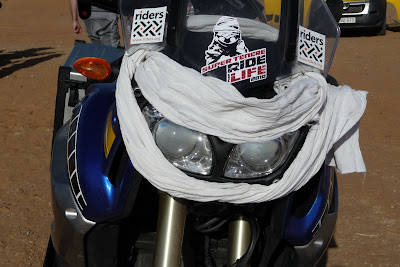
Having ridden approaching 3000km on the XT1200z (and being an owner of a TRX engined old super tenere) I have a fair impression on what they ride like.
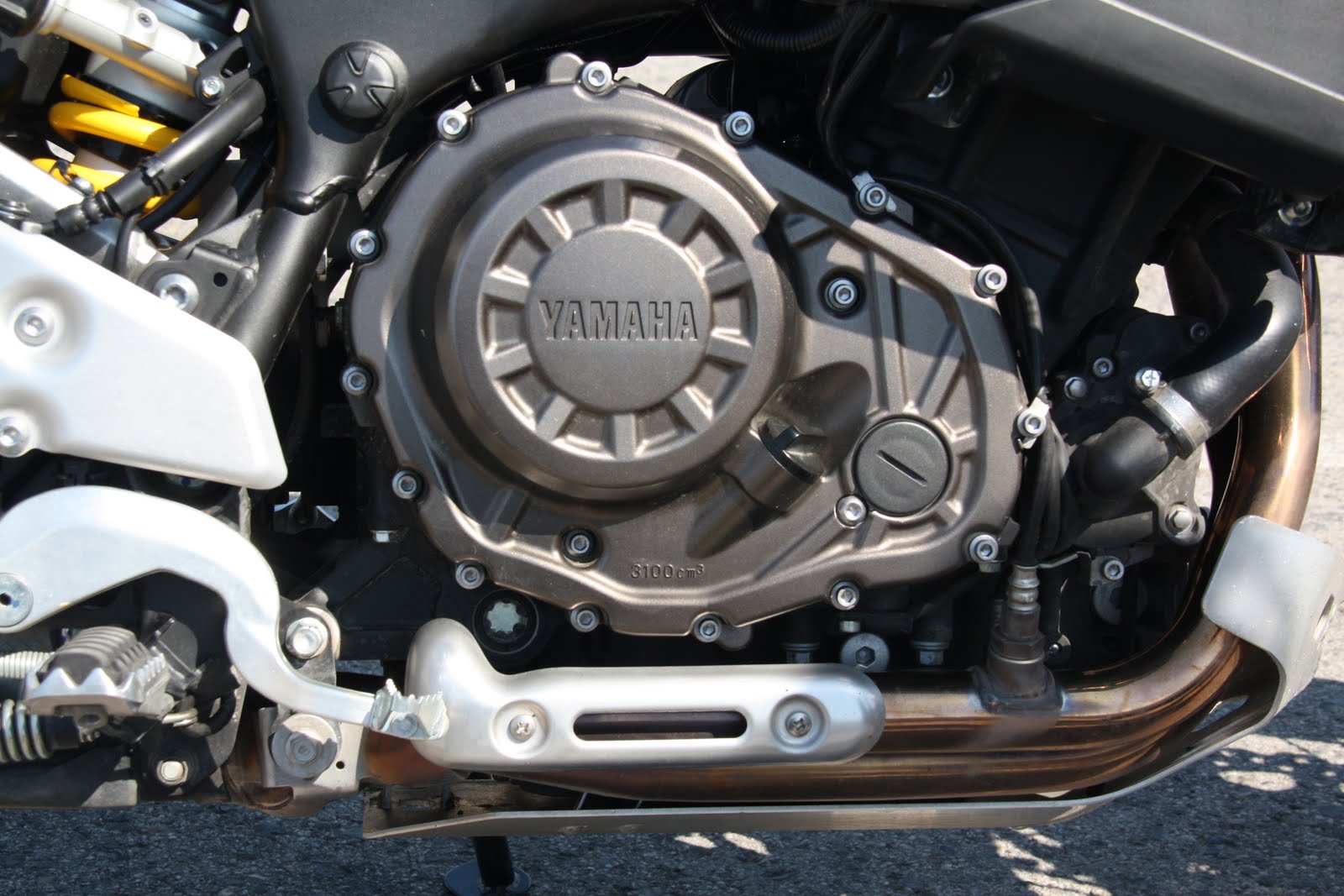
That said, the bike's no slouch, its no sports bike but the power delivery is smooth across the rev range with only a slight dip around 4.5k. Overtakes were a breeze and I had the bike up to 220kmh on a few occasions in the desert. Some claimed they saw as high as 230kmh with the bikes loaded up with panniers and top box.
It wasn’t until the second day of riding the bike that I began to not be concerned about the engine and really started appreciating what it was about. The seat was without doubt the most comfortable seat I've ever sat on a bike of this type. The riding position was very natural when seated. 8 hours in the saddle and no aches or pains at all, blooming brilliant. When stood up on the pegs, I felt the pegs could have been half an inch or so further back.
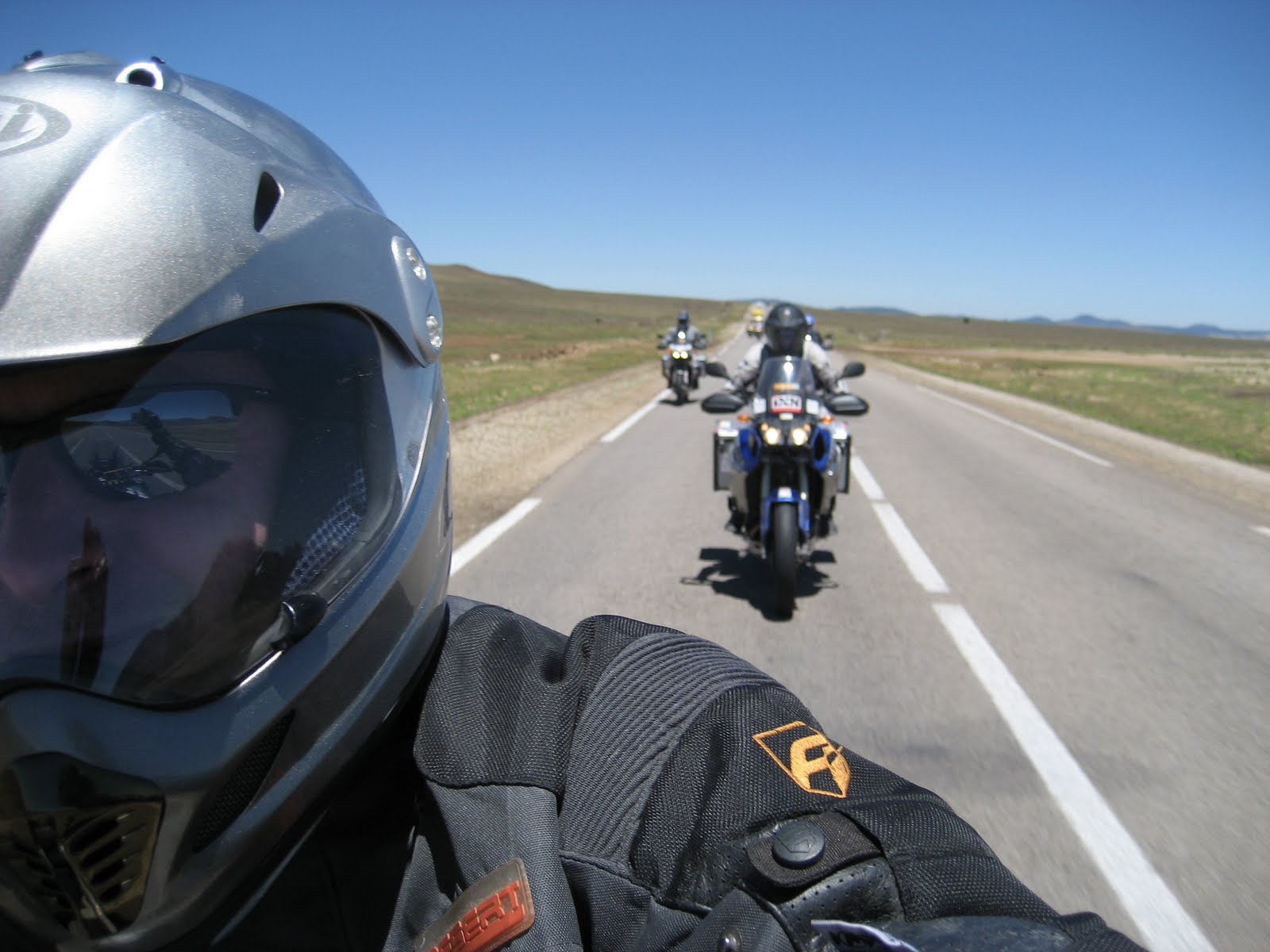
On day two I began to suspect that the traction control system was affecting power delivery. With the traction control system turned off the bike did indeed feel a little bit more responsive however I soon learnt why.... Unknown to me until I turned the traction control off was how slippery the road surfaces were. It was as if the tarmac had been polished smooth by all the airborne dust and sand. The fact that I found I could get the back end to step out at will now on the bends wasn’t because I had found an extra 20 horses at all, it was because the roads were so damn slippery and the traction control system had been quite rightly stopping me from doing something stupid.
By the end of the five day ride I was convinced. The traction control system is the dogs bollox. If you're brave enough, you can hit the apex of a bend on full lean and just open the throttle wide and put your faith in the traction control which will provide the maximum amount of power down possible without letting you lose traction with no drama and no fuss.

The bikes handling was also surprisingly good. A very neutral and planted feel compared to all other adventure style bikes I've tried. I like the 19" front wheel setup as it allows for much sharper steering and a more sports bike feel yet for the relatively sedate pace of offroading a bike like this, I don’t think the smaller wheel size is much of an impact.
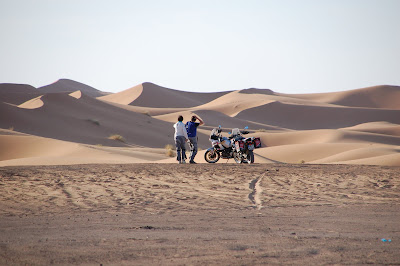

Off-road, it was... erm.... interesting. The bikes were shod with road tyres which by that point we'd pretty much wrecked (yes, front and back tyres trashed in 3000 miles), so riding in sand required a great amount of concentration to stay right side up. The bike felt easier to ride than my XTZ850 but harder than my KLR650 off-road. The suspension was a little too soft on the front and I managed to bottom out the forks a couple of times but the backend was surprisingly capable. Ground clearance might become an issue under extreme circumstances as I managed to ground the sump guard once after a heavy landing. As you can see in one of the videos, Helder Rodruigez managed to take his stock XT1200 with bald tyres up and over some pretty large dunes so it’s not so much what you ride but how good you are at it.... and he is extremely good.
Speaking with someone that worked on the bikes development (also a Dakar rider), I was assured the bike was going to be like the new FJ1300 in that the modern technology improvements and tighter tolerances combined with modern oils meant that these new engines will be totally reliable and capable of achieving really really high mileages with out problem. The bikes had also been tested to run on low quality fuel and even the cat would shrug off having to use leaded fuel. It was quite lengthy and frank conversation I had and I was left feeling quite positive and assured that I wasn’t being spun a yarn and that Yamaha had spent a considerable time getting this right. (4 years of development allegedly)
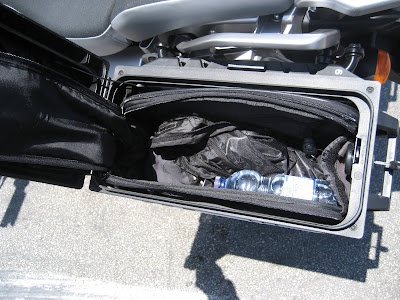
There are one or two design flaws I spotted, the first being the panniers which although they look aluminium are actually plastic - which on two bikes were broken off in a relatively low speed tumble.
Another one which may or may not be a problem was the frame design on the LHS where it had to be bent around the output shaft in order to clear it. Certainly my limited engineering exposure made me double take when I saw it as it was clearly something that gave Yamaha a few headaches. Whether the design proves to be strong enough or not, only time will tell. Let’s hope they learnt from the previous Super Tenere's incarnation (where the frames snap in a similar place).
Oh, one more snippet.... Despite the Yamaha official advice, the ABS system can be turned off completely for riding offroad. It requires the removal of a fuse on the same circuit as the speedo. Thanks to the non canbus system it should be pretty easy to farkle a simple switch to isolate just the ABS so that it can be deactivated when required.
Would I buy one? I must say I had to think this through as my heart was telling me to go straight down to the dealer and get one ordered. My head however is telling me to wait a little and see where the prices go. I suspect that in a year or so the 14,000 Euro price tag will drop somewhat especially when one considers that you can buy a similarly equipped 1200 Bandit for half that money.
Hell I could buy a brand new BKing and have change to buy a 1150GS to go along side.
I will own one at some point but my pockets aren't deep enough to swallow the depreciation I suspect the first editions will suffer.
I wouldn't be surprised however if in years to come the XT1200Z will prove to be the thinking mans adventure motorcycle of choice.
(n.b. Bold text is not the author's emphasis)
Original Article on the Super Tenere Owners Forum
Subscribe to:
Posts (Atom)